 Ultra Running Hub
Night Running in Ultras: A Complete Guide
Everything you need to run through the dark — headlamp selection, pacing adjustments, nutrition shifts, and how to train your night vision for mountain racing.
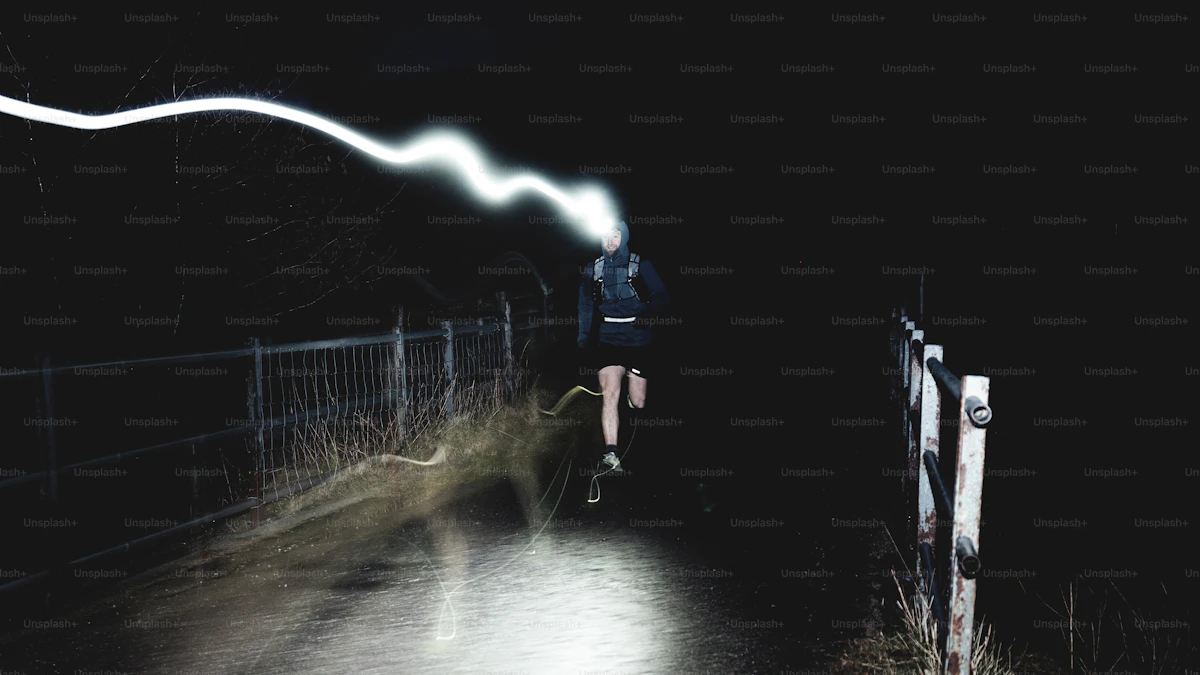
The night section of an ultra is where races are won and lost. While most runners slow to a crawl, get disoriented, or park themselves at an aid station until dawn, the runners who've prepared for the dark keep moving and gain hours on the field.
Running at night is a different sport than running in daylight. Your depth perception changes, your pace drops, your nutrition needs shift, and your psychology gets tested in ways that daylight running never touches. Here's everything you need to know.
Headlamp Selection: The Gear That Matters Most
A bad headlamp at night is worse than bad shoes. You cannot run what you cannot see, and the wrong light turns technical trail into a minefield.
What to look for:
- 300–500 lumens minimum. You don't need a spotlight, but you need enough light to see roots, rocks, and trail markers 20–30 meters ahead. Below 300 lumens, you'll constantly be surprised by obstacles.
- Spot and flood beam. Spot beams throw light far ahead for navigation. Flood beams illuminate the area around your feet for foot placement. You need both. Most quality headlamps have a mode that combines them.
- Battery life that exceeds your night section. If your night section is 8 hours, your headlamp needs 10+ hours of runtime at your preferred brightness. Not the manufacturer's rated runtime at minimum brightness — the actual runtime at the setting you'll use.
- Rechargeable with a backup plan. USB-rechargeable headlamps are convenient, but carry spare batteries or a second lamp. Batteries die at the worst possible time.
- Comfortable over a hat or buff. You'll be wearing this for 6–12 hours. An uncomfortable strap or hot spot on your forehead becomes torture over that timeframe. Test it on long training runs.
Weight matters. A heavy headlamp bouncing on your forehead for 8 hours causes neck fatigue and headaches. Look for lamps under 200g with a rear battery pack to balance the weight.
Red light mode is overrated for running. Red light preserves night vision, which is useful for astronomy. For trail running, you need to see clearly. Use your white light. The night vision argument applies when you're stopped at an aid station and don't want to blind other runners — switch to red there.
The Handheld Backup
Many experienced night runners carry a small handheld flashlight in addition to their headlamp. The reason: a headlamp mounted on your forehead reduces shadow contrast. Everything looks flat because the light source is aligned with your eyes.
A handheld light held at waist height casts shadows from a different angle, which dramatically improves your ability to see terrain features — rocks, roots, holes, and trail edges. On technical terrain, the combination of a headlamp for general illumination and a handheld for depth perception is transformative.
You don't need a powerful handheld. A 100–200 lumen light weighing 50–80g is sufficient. Hold it loosely in your non-dominant hand and angle it slightly ahead of your feet.
Pacing at Night
Accept it now: you will be slower at night. Even with a great headlamp on smooth trail, your pace drops 10–15%. On technical terrain, expect a 20–30% drop. This is normal and not a reason to panic.
Why you slow down:
- Reduced depth perception. Artificial light flattens terrain, making it harder to judge step placement and surface angle. Your brain compensates by being more cautious, which slows you down.
- Narrower visual field. In daylight, your peripheral vision handles navigation and obstacle detection. At night, you're dependent on wherever your headlamp points.
- Accumulated fatigue. Night sections in ultras almost always coincide with deep fatigue. You're not just running at night — you're running at night after 50+ miles.
How to pace:
- Shorten your stride on technical terrain. More frequent, shorter steps reduce the chance of catching a toe on an unseen root.
- Walk the descents if the trail is rocky or technical. A fall at night with 60 miles of fatigue is much more likely to end your race than a fall at mile 10 in daylight.
- On smooth trail or fire roads, maintain your run. These are sections where you can make up time while the terrain is forgiving.
Nutrition Shifts After Dark
Night running changes your nutritional needs in two ways:
Your core temperature drops. As the air cools and your pace slows, you burn more energy maintaining body temperature. Caloric needs increase by 10–20%. If you were eating 200 cal/hour during the day, bump it to 250 at night.
Warm food becomes essential. Broth, ramen, hot cocoa, warm flat cola — anything warm. Not just for the calories, but for the psychological boost. A cup of hot broth at a night aid station can transform your mental state in a way that no gel or energy bar can match.
Caffeine deployment. If you've been saving caffeine for the back half of the race (and you should), night is when you deploy it. Start with 100mg as darkness falls, then 50–100mg every 2–3 hours. Don't overdo it — too much caffeine causes jitteriness and GI distress. But strategic caffeine is the difference between running through the night and sleepwalking.
Training for Night Running
You'd be amazed how many runners sign up for a 100-miler and never once run in the dark during training. Then they're shocked when the night section destroys them.
Build night running into your training:
- One night run per month minimum in the 3–4 months before your race. Run your regular training route in the dark. Get comfortable with your headlamp, your pacing, and the psychological shift.
- One long night run before your race. A 3–4 hour session starting at 10 PM or midnight on terrain similar to your race course. This is where you test your full night kit: headlamp, handheld, layers, reflective gear, nutrition plan.
- Practice navigation at night. Trail markers that are obvious in daylight become invisible at night. Practice spotting reflective markers and flagging tape by headlamp. Know what your race uses for marking and what it looks like in artificial light.
Night vision adaptation. Your eyes take 20–30 minutes to fully adapt to darkness. If you're running under a bright headlamp, your eyes never adapt. When you turn off the light (at an aid station, for example), you're temporarily blind.
One technique: on moonlit nights or in open terrain, try turning your headlamp off for a few minutes. Your eyes adjust, and you may find you can run by moonlight alone on smooth trails. This preserves battery life and gives your eyes a break from the harsh artificial light.
Staying Warm
Your pace drops at night. Your body produces less heat. The air temperature falls. This triple threat means hypothermia is a real risk in the night section, even in races that were warm during the day.
Layer strategy:
- A lightweight long-sleeve base layer as the first line of defense
- A wind-resistant jacket for exposed ridgelines or sections with cold wind
- Arm sleeves that can be pushed down or removed (versatile temperature management)
- Thin running gloves — your hands lose heat fast, and cold hands are miserable and impair dexterity
- A buff or neck gaiter — covers your neck and can be pulled over your ears
Pack these layers in your vest or have your crew deliver them at the last daylight aid station. Don't wait until you're cold — by the time you're shivering, your core temperature has already dropped and rewarming while running is difficult.
The Psychological Game
Darkness amplifies everything. Fatigue feels deeper. Pain feels sharper. Loneliness hits harder. The trail that was beautiful at sunset becomes ominous at midnight.
How to manage it:
- Run with your pacer. If you have one, this is when you need them most.
- Focus on your light cone. Don't look into the darkness beyond your headlamp. Your world is the 20 meters in front of you. Nothing else exists.
- Count to the next aid station. Not in miles — in minutes. "Aid station in 40 minutes. I can do 40 minutes."
- Remember the sunrise. Every minute of darkness is one minute closer to dawn. And when the sun comes up after a full night of running, the surge of energy and hope is one of the most powerful experiences in ultra running.
The runners who master the night don't just survive it — they use it as a weapon. While others slow, stop, or drop, they keep moving forward in the dark. By sunrise, the race has changed. The gap that took 60 miles of daylight running to create can widen by 30 minutes in a single night section.
Train for the dark. Respect the dark. And then run through it.